






















Accessible housing close to transport hubs transforms everyday mobility, spontaneous community engagement, and independent living for NDIS participants across Australia. While a purpose-built home provides essential physical safety indoors, true autonomy depends on how effortlessly you can step outside and connect with medical appointments, workplaces, shopping precincts, and social events. By prioritising transit-connected neighbourhoods alongside compliant architectural features, participants reduce reliance on private vehicles and unlock seamless travel across their local community.

Evaluating Transit-Connected Neighbourhoods
| Location Factor | What to Inspect | Why It Matters for Daily Independence |
| Step-Free Station Access | Lifts, tactile ground indicators, and level boarding ramps | Ensures independent train or tram boarding without steep obstacles |
| Pathway Connectivity | Continuous, wide footpaths with kerb ramps between home and station | Prevents mobility bottlenecks for power wheelchairs and walking frames |
| Low-Floor Bus Routes | Frequent, wheelchair-accessible bus services within 400 metres | Provides reliable backup transit when rail maintenance occurs |
| Precinct Amenities | Proximity to pharmacies, GPs, grocery stores, and cafes | Enables quick errands without complex transport bookings |
Why Finding Accessible Housing Close to Transport Hubs Matters
Choosing the right suburb is just as vital as selecting the right floor plan. When participants understand how individualised housing plans unlock total control, location becomes a core pillar of their residential blueprint rather than an afterthought. Living near major rail, tram, or accessible bus corridors also creates practical efficiencies in your funding, demonstrating how Core Supports empower daily NDIS independence by stretching transport allowances further and simplifying support worker shift transitions.

Additionally, predictable, step-free commuter routes reduce everyday travel fatigue and support consistent routines. Combining well-located Specialist Disability Accommodation (SDA) or Supported Independent Living (SIL) with reliable public transit illustrates how to easily safeguard daily NDIS independence over the long term.
Practical Search Framework for Transit-Friendly Homes
| Search Phase | Strategic Focus | Actionable Verification Step |
| 1. Corridor Mapping | Identify accessible transit lines first | Shortlist train stations and major bus interchanges with certified lift access |
| 2. Micro-Route Testing | Audit the “last mile” from front door to platform | Test the physical path of travel during peak hours to check gradient and kerb cuts |
| 3. Dwelling Verification | Confirm internal SDA or accessibility compliance | Verify doorway widths, bathroom turning circles, and backup power systems |
| 4. Support Alignment | Synchronise worker travel and shift handovers | Ensure support workers can easily reach the property via public or local transit |
How Permalink Connects You to Well-Located Accessible Homes
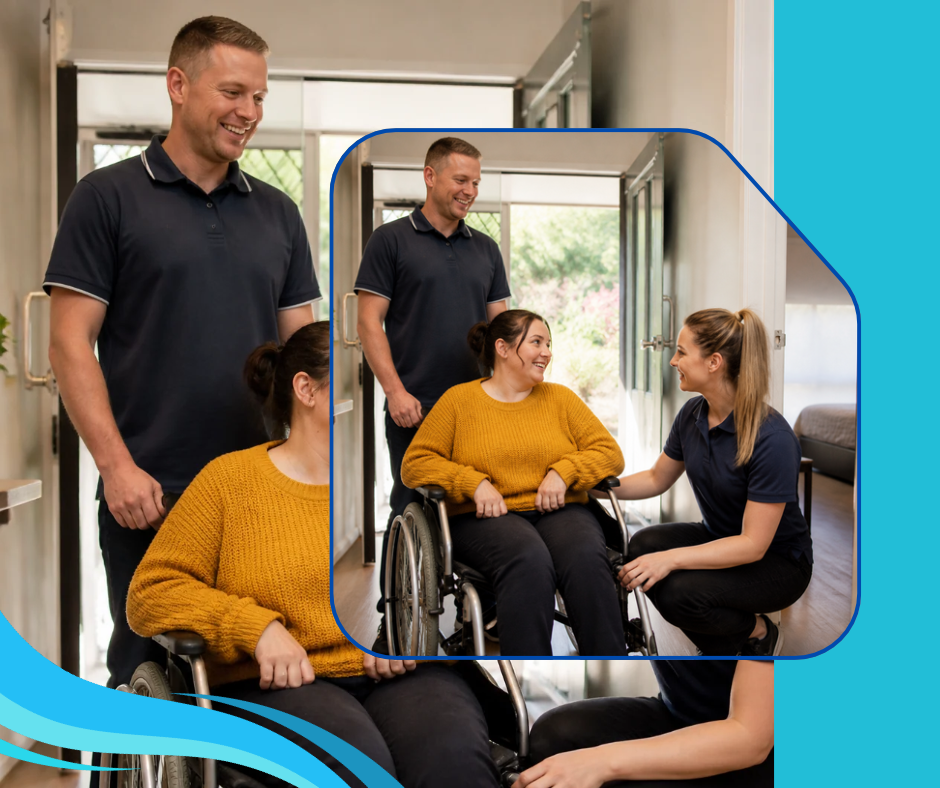
At Permalink, we recognise that a truly empowering home combines compliant internal design with effortless external connectivity. Our specialised team assists participants across Australia to utilise their NDIS funding effectively and maximise their community access by:
- Curating Transit-Connected Vacancies: Sourcing SDA and SIL properties positioned near accessible train stations, low-floor bus networks, and vibrant local precincts.
- Conducting End-to-End Suitability Checks: Evaluating both indoor accessibility fit-outs and surrounding streetscape pathways before you sign a tenancy agreement.
- Supporting Seamless Tenancies: Partnering with your Support Coordinator and care providers so your transition into a connected neighbourhood is completely stress-free.
Furthermore, learn more about our services today!
You can also Follow us on social media for updates, success stories, and more!
 Coming Next Week: How Tenant Advocacy Services Protect Your NDIS Rights
 Recommended for You:
Last Week’s Feature: How Support Coordinators Accelerate Your Housing Match
Deep Dive: How Flexible Accommodation Supports Long Holiday Breaks
NDIS Tips: How to Prepare Your Home Environment for Severe Weather